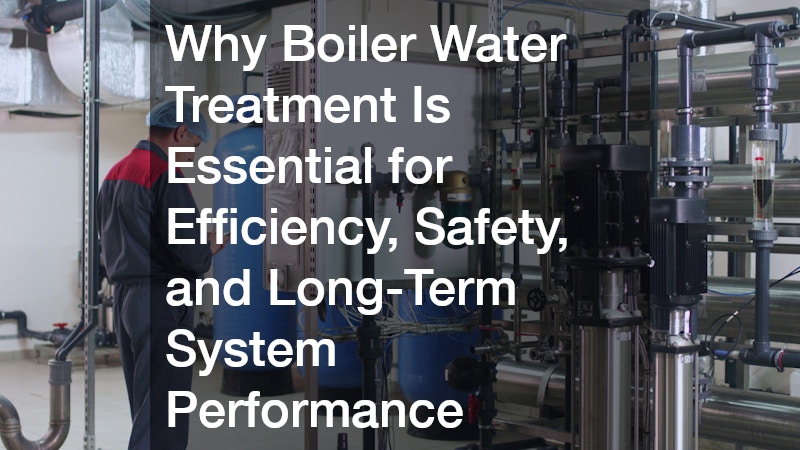
Industrial and commercial heating systems depend heavily on boilers to deliver consistent heat and steam for daily operations. Whether used in manufacturing, food processing, hospitals, or large facilities, boilers are expected to run efficiently under constant demand. However, one of the most overlooked factors affecting performance is boiler water treatment. Without proper treatment, even a high-quality boiler system can suffer from scaling, corrosion, reduced efficiency, and unexpected breakdowns.
Understanding how water quality impacts boiler performance is essential for maintaining reliability, extending equipment lifespan, and reducing operating costs. A structured boiler water treatment program ensures that the system continues to operate safely and efficiently over time.
What Boiler Water Treatment Involves
Boiler water treatment refers to the process of conditioning and managing the water used within a boiler system to prevent damage and maintain performance. Because water naturally contains minerals, oxygen, and other impurities, untreated water can cause serious issues when exposed to high heat and pressure.
Treatment typically includes chemical additives, filtration, softening, and regular monitoring. These processes work together to control scale buildup, prevent corrosion, and reduce the presence of harmful contaminants. In many systems, both feedwater and boiler water require separate treatment strategies depending on operating conditions.
Preventing Scale Buildup and Efficiency Loss
One of the most common problems in boiler systems is scale formation. When hard water is heated, minerals such as calcium and magnesium can separate and form solid deposits on internal surfaces. Over time, these deposits restrict heat transfer and force the system to work harder to produce the same amount of steam or heat.
Effective boiler water treatment helps prevent this issue by removing hardness before it enters the system or by using chemicals that keep minerals suspended in the water. Even a thin layer of scale can significantly reduce efficiency, leading to higher fuel consumption and increased operating costs.
By maintaining clean heat transfer surfaces, facilities can ensure that boilers run at optimal efficiency and avoid unnecessary strain on equipment.
Controlling Corrosion and System Damage
Corrosion is another major threat to boiler systems. Oxygen, carbon dioxide, and low pH levels can all contribute to the gradual deterioration of metal components. Left unchecked, corrosion can lead to leaks, weakened pipes, and costly system failures.
A proper boiler water treatment program addresses corrosion by removing dissolved gases and maintaining balanced chemical levels within the system. Oxygen scavengers, pH adjusters, and protective film-forming chemicals are commonly used to reduce the risk of internal damage.
In addition to chemical treatment, mechanical deaeration is often used to remove oxygen from feedwater before it enters the boiler. This layered approach provides stronger protection and helps extend the life of critical components.
Improving Safety and Operational Reliability
Boiler safety is directly linked to water quality. Poorly treated water increases the risk of overheating, pressure instability, and equipment failure. In extreme cases, untreated systems can experience dangerous malfunctions that put both personnel and facilities at risk.
Consistent boiler water treatment helps maintain stable operating conditions by ensuring that heat transfer surfaces remain clean and internal pressures remain predictable. This reduces the likelihood of unexpected shutdowns and improves overall system reliability.
For facilities that rely on continuous operation, such as hospitals or manufacturing plants, maintaining safe and consistent boiler performance is not optional—it is essential.
Reducing Maintenance Costs and Downtime
Unplanned maintenance and system downtime can be extremely costly, especially in industrial environments where boilers are central to operations. Scale buildup and corrosion often lead to frequent repairs, part replacements, and emergency service calls.
A well-managed boiler water treatment plan significantly reduces these risks by preventing damage before it occurs. Regular water testing and monitoring allow technicians to detect early signs of imbalance and make adjustments before problems escalate.
This proactive approach not only reduces repair costs but also minimizes downtime, helping facilities maintain productivity and avoid operational disruptions.
Monitoring and Ongoing Water Management
Boiler water treatment is not a one-time process—it requires ongoing monitoring and adjustment. Water conditions can change due to variations in source water quality, system usage, and environmental factors.
Routine testing helps ensure that chemical levels remain within recommended ranges and that the system continues to operate efficiently. Many facilities implement automated monitoring systems that track conductivity, pH, and other key indicators in real time.
By continuously managing water quality, operators can respond quickly to changes and maintain consistent performance across the entire system.
Environmental and Energy Efficiency Benefits
Proper boiler water treatment also contributes to environmental sustainability. Efficient boilers consume less fuel, which reduces greenhouse gas emissions and overall energy usage. Additionally, minimizing water waste and chemical overuse helps reduce the environmental footprint of the facility.
When systems operate at peak efficiency, they require less energy to produce the same output, making boiler water treatment an important part of broader energy management strategies.
Boiler systems are a critical part of many industrial and commercial operations, but their performance depends heavily on water quality. Without proper boiler water treatment, issues such as scale buildup, corrosion, and inefficiency can quickly lead to costly repairs and reduced system lifespan. By implementing a structured treatment program that includes chemical conditioning, filtration, and continuous monitoring, facilities can improve efficiency, enhance safety, and reduce long-term operational costs. In the end, maintaining proper water treatment is one of the most effective ways to protect boiler systems and ensure reliable performance year after year.